
A NEFT narration usually contains a company name. A UPI narration usually does not.
What it contains is a virtual payment address, which is an identifier the payee chose, routed through whichever app they use. "UPI/512345678901/Payment from/9876543210@ybl" identifies a phone number at Yes Bank's handle. "UPI/DR/523401234567/PAYTMQR281005050101..." identifies a QR code sticker. Neither is a business name, and neither will match a ledger in the client's Tally.
On a retail or restaurant client, that is most of the statement.
What each part of a UPI narration is
The structure is consistent enough to read, once you know what you are looking at.
The long number is the RRN, a twelve digit retrieval reference the bank can trace a specific payment with. It is unique, which makes it an excellent key for matching a payment against a receipt elsewhere, and useless for identifying who was paid.
The part after the @ is the PSP handle: @ybl, @okhdfcbank, @paytm, @axl. It tells you which app or bank routed the payment, not who received it. A supplier who switches from PhonePe to Google Pay keeps the same bank account and changes handle, and a naive matcher treats them as two parties.
The part before the @ is the only piece that might identify the payee, and it is often a phone number or a merchant string rather than a name.
The ledger explosion, and why it is worse than Suspense
Four hundred UPI lines with four hundred distinct handles, imported without matching, produce four hundred ledgers.
This is a worse outcome than everything landing in Suspense. Suspense is visibly wrong and gets cleared. Four hundred plausible-looking ledgers named after phone numbers are individually defensible and collectively make the trial balance unusable, and Tally will not merge them for you afterwards. The cleanup is manual, ledger by ledger.
The defence is to match against ledgers that already exist before creating anything. A handle seen before should resolve to whatever it resolved to last time, and a handle never seen before should be a question rather than a new master. Why everything landing in Suspense is the symptom, not the disease covers the other failure mode.
The one-time mapping that pays for itself
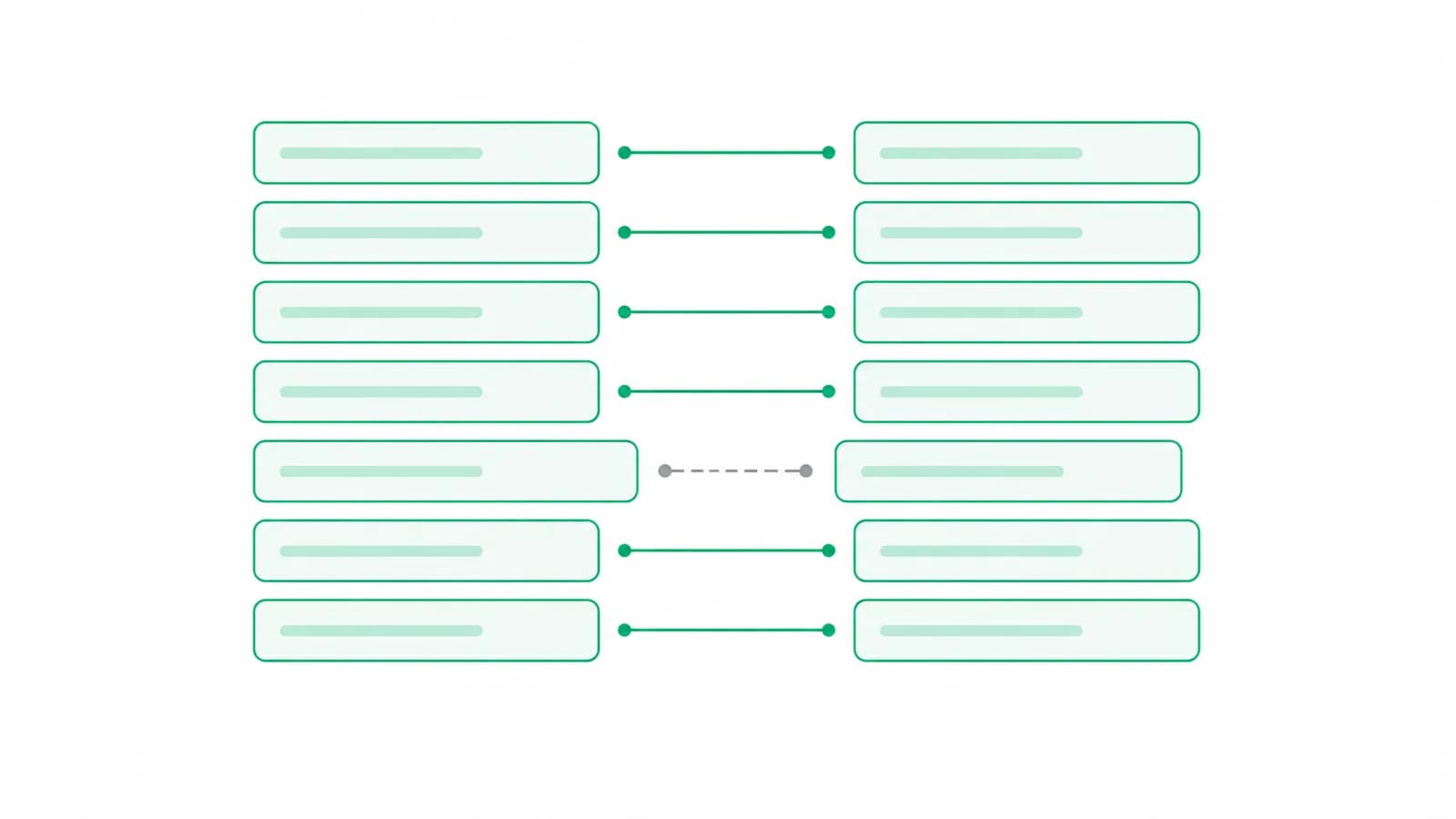
Most clients transact with a stable set of counterparties. The handles repeat.
A vegetable supplier paid by UPI three times a week is the same handle every time. Mapping it once, to the correct ledger, resolves every future occurrence. The work is front-loaded into the first month and close to zero afterwards, which is the same economics as remembering a bank's column layout: do it once per counterparty, not once per statement.
What makes this tractable is that the long tail is genuinely long but thin. On a typical retail client, twenty handles cover most of the value and several hundred cover the remainder, most of them one-off customer receipts that belong in a single sales or cash receipt ledger rather than in a ledger of their own.
Customer receipts are not four hundred debtors
The most common error is treating every inbound UPI as a party.
A customer paying eight hundred rupees at a counter by scanning a QR code is a cash sale that happened to settle through UPI. They are not a debtor, they will never be one, and creating a ledger for them records a relationship that does not exist.
Inbound UPI on a retail client is usually revenue, and belongs in the sales or counter receipts ledger with the RRN carried through for traceability. Outbound UPI is where party identification matters, because that is where a supplier relationship exists and where the payment needs to sit against an invoice.
That asymmetry is worth encoding as a rule rather than deciding four hundred times: inbound below a threshold to receipts, outbound to a matched party, anything unusual flagged for a look.
Conclusion
UPI broke an assumption that bank statements used to satisfy: that the narration would eventually name a business. It names an address the payee chose, and the same business can have several.
The answer is not better guessing. It is matching against the ledgers a client already has, remembering the handles that resolve, and treating the inbound retail tail as revenue rather than as debtors. Greenote strips the transport noise out of the narration and binds what remains to a ledger that already exists in the company rather than inventing one. See how counterparties are read.
Turn bank statements into Tally vouchers offline
Greenote reads 100+ Indian banks and posts clean vouchers straight into Tally, fully on your PC. No uploads, no cloud, no manual entry.
7-day free trial, no card required. Works with Tally Prime & ERP 9.