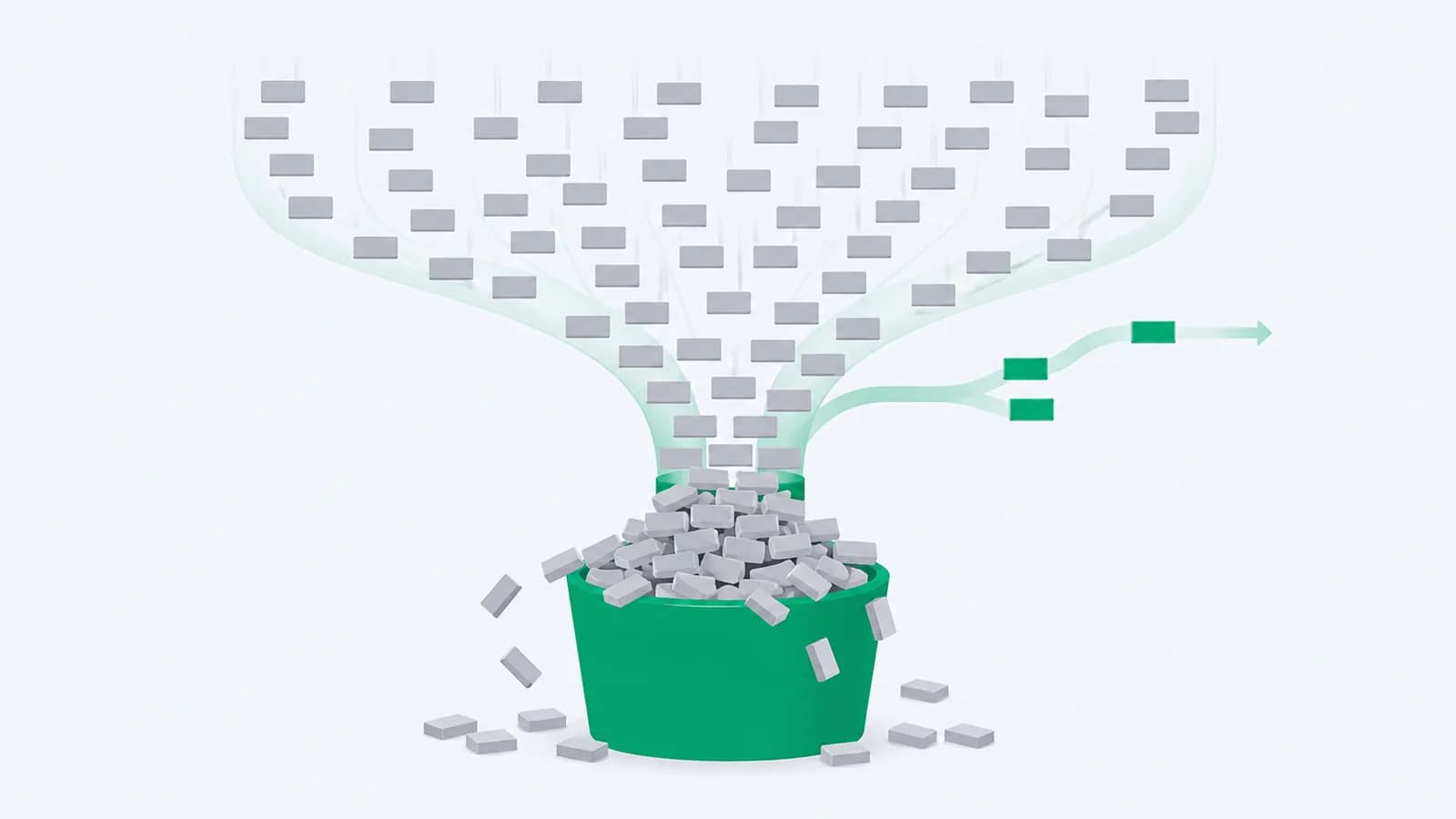

A bank statement never shows you TDS. It shows a payment that is smaller than the invoice, with no explanation of the difference.
An invoice of ninety thousand against which nine thousand was deducted appears in the statement as a single line of eighty-one thousand. Read literally, that line says the vendor was paid eighty-one thousand. Booked that way, three things go wrong at once: the expense is understated by nine thousand, the vendor ledger carries a balance that will never clear, and the TDS you actually deposited sits in the bank as an unexplained outflow to the government.
None of that shows up in a bank reconciliation. Every figure agrees with the statement, because the statement is exactly what was booked.
The payment line is net, the entry is gross
The correct treatment splits one bank line into two halves of the same transaction.
The expense and the liability are recorded at the gross invoice value when the bill is booked. The payment then discharges part of that liability in cash and part of it by deduction. In Tally terms the payment voucher debits the vendor by the gross amount, credits the bank by the net amount actually paid, and credits a TDS payable ledger with the difference.
The vendor ledger is now square. The vendor's own books show an invoice of ninety thousand settled by eighty-one thousand in cash and nine thousand of tax deducted on their behalf, and the two sets of books agree. Booking the bank figure alone leaves a nine thousand gap that neither side can explain, and it is normally discovered months later when the vendor asks for a balance confirmation.
The challan is a separate line, weeks later
The deducted tax leaves the bank on its own, usually on or before the seventh of the following month, as a single challan covering every deduction in that period.
On the statement this is one payment to the government for an amount that matches no invoice, because it is the total of many. Treated as an expense it inflates costs; treated as a payment to a party it creates a ledger for the Income Tax Department that should not exist. It is neither. It clears the TDS payable liability that the individual payment entries created.
This is the part that most often goes wrong in a bulk import. The challan is large, round and unlike any other line in the statement, so it gets assigned to whatever expense head looks closest. Assigning a ledger to every line is where that decision should be made deliberately rather than by pattern.
Section 194 and the rate that applied
Which section applies decides the rate, and the rate decides whether your deduction was correct.
Professional and technical fees fall under 194J, contractor payments under 194C, rent under 194I, commission under 194H. The rates differ, the thresholds differ, and a payment classified under the wrong section is a short deduction that carries interest and disallowance consequences at assessment.
A bank narration rarely tells you which. "NEFT-ACME CONSULTANCY" could be professional fees or a contract. The decision comes from the invoice, not from the statement, and this is one of the places where a bulk bank import genuinely cannot decide for you: it can identify the counterparty and the amount, but the section is a judgement about the nature of the service.
What reconciles it, and when
Three things have to agree at the end of a quarter: your TDS payable ledger, the challans actually paid, and the return filed.
The TDS payable balance after the challan clears should be nil for the period. Anything left is either a deduction made and not deposited, which carries interest at 1.5% per month, or a challan deposited for more than was deducted.
The deductee side then has to match Form 26Q, and the vendor's Form 26AS or AIS is where they will check it. A deduction recorded in your books against the wrong PAN, or not reported at all, shows up as a credit the vendor cannot claim, and that conversation always comes back to you.
The practical check is simple and worth running before every quarterly return: total the TDS payable ledger for the quarter, total the challans, and total the return. Three numbers, one of which is usually wrong, and it is far cheaper to find in September than in a scrutiny notice.
Conclusion
TDS is the clearest case of a bank statement being an incomplete record rather than a wrong one. The line is accurate: eighty-one thousand did leave the account. It just is not the transaction.
Anything that reads a statement and posts what it sees will book the net figure, and every net figure is a small permanent error in two ledgers at once. The entry has to be built from the invoice, with the bank line as one half of it. Greenote reads the statement and shows you every line before anything posts, which is the point at which a short payment can be recognised as a deduction rather than a discount. See how the review step works.
Turn bank statements into Tally vouchers offline
Greenote reads 100+ Indian banks and posts clean vouchers straight into Tally, fully on your PC. No uploads, no cloud, no manual entry.
7-day free trial, no card required. Works with Tally Prime & ERP 9.